
blog
IP2Innovate

IP2Innovate welcomes Draghi’s call to improve the pipeline from innovation to commercialization
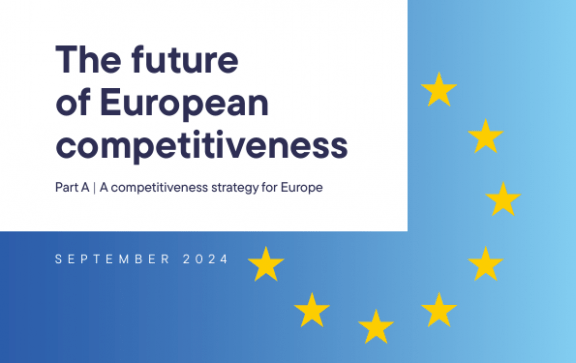
IP2Innovate welcomes the report on EU competitiveness by Mario Draghi published yesterday, and in particular its emphasis on improving innovation.

The in-depth report cements competitiveness and boosting European productivity at the heart of the EU’s political agenda. It calls for Europe to improve the pipeline from innovation to commercialisation.

IP2Innovate fully agrees. One way to do that is to address the lack of proportionality considerations in patent litigation in European patent courts. Instead of granting remedies on the basis of a proportionality assessment, the default, automatic remedy is an injunction, even when the patent involves only a minor feature of a complex product.

This makes it far too easy for opportunistic patent assertion entities (PAEs) to sue productive businesses. It’s very profitable to PAEs but does nothing for the innovation process except penalise innovators and clog it up. This funnels money away from the development of new products in Europe, instead going to pay outsized legal settlements that often go far beyond what the PAE’s patent is worth.

Last year the European Commission launched a study to look at whether proportionality is being applied in Europe as well as looking into the presence and impact of PAEs in Europe.

In spring this year IP2Innovate called for the Commission to adjust the IP Rights Enforcement Directive (IPRED) in order to ensure proportionality is applied in an effective and meaningful way.

“With this new impetus from Mr Draghi we hope the European Commission will adapt the IPRED with targeted revisions that make proportionality the norm,” said Patrick Oliver, executive director of IP2Innovate.

A key aim of the Draghi report is to address issues that are holding back European competitiveness and productivity. Europe lags its key trading partners in both respects.

The US has addressed the patents issue through a Supreme Court ruling in the 2006 eBay Vs MercExchange case, which made sure courts evaluated the facts of a case before issuing a remedy. As a result it is no longer automatic for a PAE to win an injunction from a judge in the US.

“The same needs to happen in Europe. More balance in the patent system is needed to increase innovation and the take up of new technologies necessary to narrow the productivity gap between Europe and its trading partners,” Mr Oliver said.

Share

Other blogs

IP2Innovate

IP2Innovate's submission on the upcoming European Innovation Act

IP2Innovate has responded to the Commission's call for evidence on the upcoming European Innovation Act, highlighting that proportionality in patent remedies across the EU is needed to support the European Innovation Act’s goals of creating innovation-friendly regulation and eliminating Single Market fragmentation. IP2Innovate welcomes the objectives of the upcoming European Innovation Act. A balanced patent system is an important prerequisite to ensure Europe’s global competitiveness in critical technology areas, its attractiveness for companies to invest and do business in, and to increase innovation and the take up of new technologies necessary to bridge the gap in productivity levels when compared to other major economies. Unfortunately, our member companies' experiences, supported by data, indicate that Europe's patent system currently lacks the necessary balance, undermining investment in innovation to the detriment of both the public and Europe’s competitiveness. The current practice by EU courts of granting automatic injunctions in patent infringement cases contradicts the European Innovation Act’s goals of creating innovation-friendly regulation and eliminating Single Market fragmentation. The solution is to modernize the 20-year-old IPR Enforcement Directive to align with Innovation Act objectives and to help close the innovation gap between Europe and its global competitors. Read our submission here: https://ec.europa.eu/info/law/better-regulation/have-your-say/initiatives/14593-European-Innovation-Act/F33069711_en
IP2Innovate

Professors Hofmann and Raue: Taking proportionality seriously in the Unified Patent Court

Two German law professors, Dr Franz Hofmann and Dr Benjamin Raue have pooled forces to publish a joint paper this week on the delicate issue of injunctions and damages for the infringement of patents. The paper, entitled ‘Injunctions and Damages for the Infringement of Patents under the UPCA; an Analysis in the Light of the Principle of Proportionality’ calls for a more nuanced approach to patent infringement cases, and it urges judges of the recently launched UPC to consider damages instead of automatic injunctions as a remedy in their rulings.
IP2Innovate

IP2Innovate response to the Commission’s Call for Evidence on the Digital Fitness Check

IP2Innovate welcomes the Commission’s Digital Fitness Check and its commitment to delivering a simpler, more competitive Europe. As a coalition of small and large companies that create innovative products and services in Europe and that collectively hold thousands of European patents, IP2Innovate strongly supports efforts to reduce unnecessary regulatory burdens for companies while maintaining high standards of protection for fundamental rights, consumer safety and European values. A key obstacle to Europe’s digital competitiveness lies in the outdated framework governing the enforcement of patents. The Intellectual Property Rights Enforcement Directive (IPRED), adopted in 2004, requires remedies for patent infringement to be proportionate but does not set out clear criteria for how proportionality should be assessed in relation to today’s complex digital and connected technologies – such as AI systems, IoT devices, semiconductors, smart vehicles or critical infrastructure. As a result, the lack of clear rules on how to ensure remedies are proportionate in relation to complex products has led to the de facto automatic granting of injunctions in patent cases, which result in the removal of entire product lines from the market even when the patent infringement relates to a minor feature of a complex product that incorporates thousands of patented components1. For complex products automatic injunctions create excessive litigation risk, legal uncertainty and significant disruption to supply chains, investment and innovation, and force Europe’s digital innovators to pay excessively high licensing fees for patents to settle patent lawsuits. This situation is to the detriment of Europe’s industrial base and competitiveness. Modernising IPRED to clarify how courts should assess proportionality and consider alternative remedies where appropriate would directly support the Commission’s simplification agenda. While this would require targeted amendments to the IPRED, the overall effect would be a reduction in regulatory burdens through: • Reduced litigation risk and administrative burden, particularly for SMEs and companies developing complex digital products; • Improved legal certainty and predictability, enabling companies to invest with confidence; • Lower financial and operational disruption, safeguarding innovation, jobs and supply chains. Amending the IPRED to provide further specificity on proportionality in patent litigation would not impact a patent holder’s ability to enforce its patent rights, but would make sure such enforcement is appropriately balanced in the digital age. Additionally, amending the IPRED would help reduce the number of avoidable court cases by making appropriate settlements between patent owners and innovative product companies more likely. As a result, courts would face a lower workload and could handle the remaining cases more efficiently, ultimately strengthening trust in the European patent system. A clearer, more balanced framework would align Europe with other regions of the world, enhance Europe’s global competitiveness, and prevent distortive practices that extract value without contributing to innovation. This issue is particularly well‑suited to be addressed at EU level, as digital products and services circulate seamlessly across the entire Single Market. Divergent interpretations of IPRED’s proportionality requirement create fragmentation, legal uncertainty and opportunities for forum‑shopping. Because patent enforcement rules directly affect the functioning of the Single Market, action by individual Member States cannot entirely resolve these inconsistencies. Only EU‑level reform can ensure uniformity and promote a proportionate and consistent application of remedies across jurisdictions. Modernising IPRED therefore directly supports the Commission’s objective of “a more cost-effective and innovation-friendly implementation of European rules – all the while maintaining high standards and core objectives of the rules”. This is exactly what IP2Innovate is calling for with the modernisation of the IPRED to clarify how courts should assess proportionality and consider alternative remedies where appropriate. Experience shows that non-binding clarification is not sufficient to address this structural problem. The Commission’s 2017 guidance on IPRED did not materially change judicial practice or reduce the near-automatic granting of injunctions in patent cases. More than two decades after its adoption, IPRED requires targeted modernisation to ensure that Europe’s patent enforcement system supports – rather than hinders – the Union’s objectives of competitiveness, simplification and technological leadership. About IP2Innovate IP2Innovate is a coalition of small and large research-intensive companies that develop innovative products and services in Europe, collectively holding thousands of European patents, as well as industry associations representing more than 40 companies. The coalition works with policymakers, the legal profession and judicial authorities to promote a balanced and innovation-friendly European patent system that supports investment, competitiveness and the successful commercialisation of new technologies in Europe. 1. This conclusion has been confirmed by the recently published Commission’s study on the enforcement of intellectual property rights in the EU - Internal Market, Industry, Entrepreneurship and SMEs Contact: contact@ip2innovate.eu https://ip2innovate.eu/
Back to overview

Subscribe to our newsletter

Privacy policy

© IP2Innovate 2025 - Website door Two Impress