
blog
IP2Innovate

Congratulatory Letter to Executive Vice-President -designate Séjourné
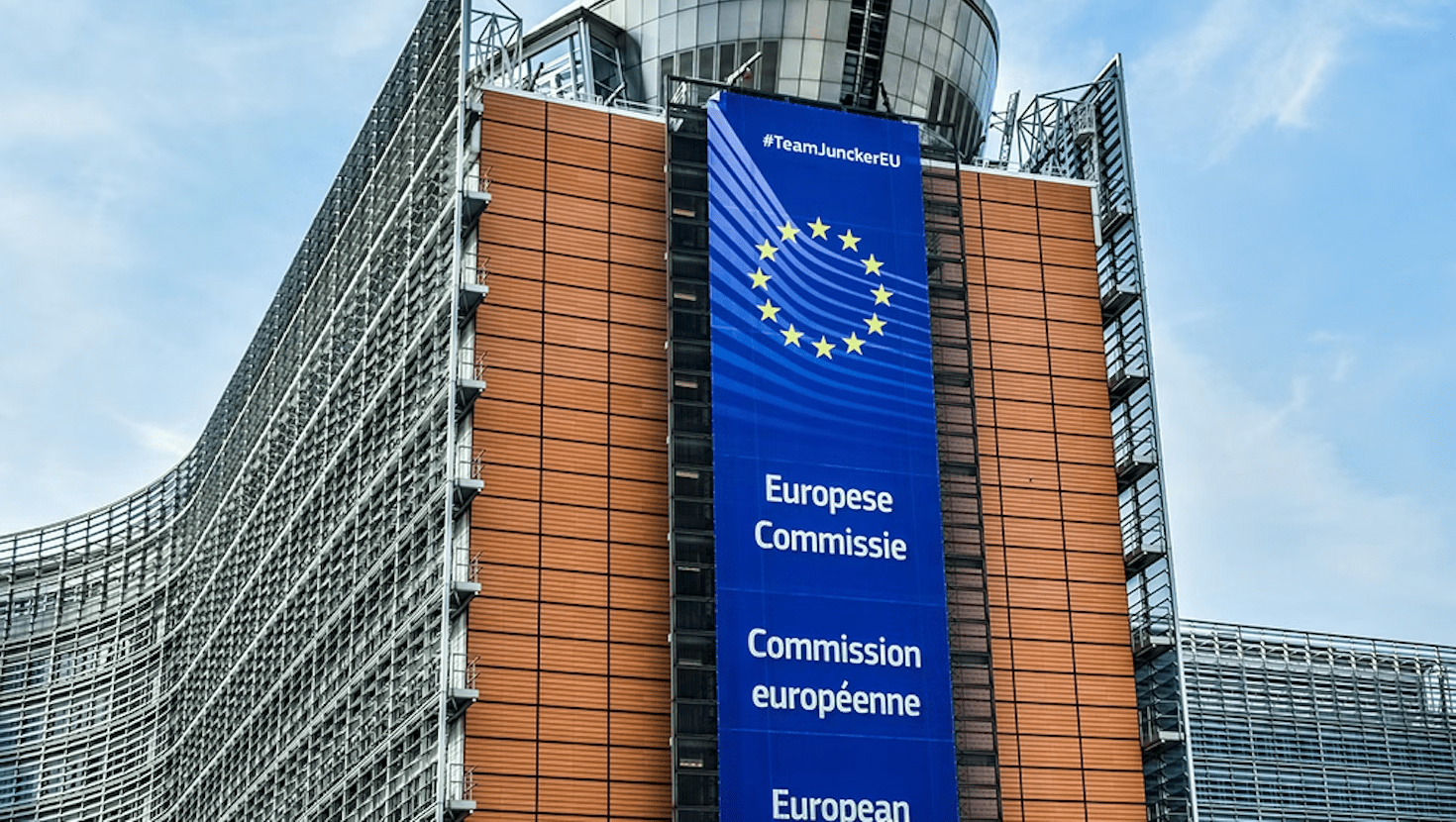
Dear Executive Vice-President -designate,

On behalf of IP2Innovate, I write to congratulate you on your nomination as the European Commission Executive Vice-President-designate for Prosperity and Industrial Strategy. You are taking on this role at a pivotal moment as Europe seeks to embrace a new era of competitiveness, productivity, and innovation.

IP2Innovate is a coalition of small and large companies that create innovative products and services in Europe and collectively hold thousands of European patents. Our members include Adidas, Apple, Amazon, ASML, Atos / Bull, BMW, Carl Zeiss, Dell, Deutsche Telekom, Freebox, Google, IMEC, Intel, Microsoft, Nvidia, Proximus, SAP, Spotify and Xiaomi. Our mission is to bring balance to Europe’s patent legal system so that it supports innovation, competitiveness and growth to the benefit of the European economy and society.

Commission President Ursula von der Leyen in her mission letter has put you in charge of the Industry, SME and Single Market portfolio. As part of that mission, you have been asked to “ensure our intellectual property policy continues to reward innovation and creativity and step up enforcement of the current rules.”

A balanced patent system is an important prerequisite to ensure Europe’s global competitiveness in critical technology areas, its attractiveness for companies to invest and do business in, and to increase innovation and the take up of new technologies necessary to bridge the gap in productivity levels when compared to other major economies. Unfortunately, our member companies' experiences, supported by data, indicate that Europe's patent system currently lacks the necessary balance, undermining investment in innovation to the detriment of both the public and Europe’s competitiveness.

We therefore believe that now is the time, 20 years after its adoption, to modernise the Intellectual Property Rights Enforcement Directive (IPRED) through targeted amendments to ensure that courts in the EU Member States and the newly established Unified Patent Court effectively consider the proportionality of remedies in their handling of patent litigation cases. Despite the existing IPRED’s requirement that remedies for patent infringement be proportionate, European courts consistently issue automatic injunctions upon a finding of patent infringement: this has happened in 99% of cases in EU countries, according to data provided by Darts-ip, the most comprehensive database of European court decisions[1].

The consequence of injunctions being issued automatically is that even an accidental infringement by a manufacturer of a patent that relates to a minor feature of a complex product can result in the entire existing product range being immediately removed from the market. Companies often settle claims to avoid that, which gives patent owners excessive leverage to demand settlements far surpassing the patented technology's value[2]. The situation is even more egregious when the defendant is an SME and the recalled product provides their only source of revenue.

This imbalance has made Europe attractive to Patent Assertion Entities (PAEs), whose attacks harm innovative operating companies – and ultimately the public – by creating a huge disincentive for investment in the R&D necessary to bring to market the next generation of innovative, including digital and green, products. Critical digital technologies such as 5G, the Internet of Things, edge computing, Artificial Intelligence and the underlying hi-tech semiconductors - because of their complexity - are at the highest risk of abusive patent litigation[3], which significantly discourages R&D investments. The immediate and full removal of products from the market can harm third parties and the public and disrupt supply chains.

While the US has clamped down on the harm caused by PAEs by  scrapping automatic injunctions, this has not yet happened in Europe at large.  A patent system in which injunctions are granted in effect automatically creates a locational disadvantage for companies having their main manufacturing base in the EU, compared with regions where proportionality is applied, such as the US.

Throughout your career you have demonstrated the will and ambition to build a more competitive Europe. As a Member of the European Parliament, you consistently highlighted concerns over practices by PAEs and the need for safeguards to protect Europe’s patent system from abuse in parliamentary questions[4] and own-initiative reports[5]. We hope the European Commission will under your leadership take steps to modernize the IPR Enforcement Directive through targeted amendments, to ensure that Europe’s patent system continues to reward innovation, remains fit for purpose in the digital age, supports our region’s growth ambitions and secures our competitiveness in critical technology areas.

We stand ready to support you and your team in this endeavor.

Yours sincerely,


Patrick Oliver

Executive Director


[1] An analysis of patent court rulings undertaken by Darts-ip for the period 01.1.2015 to 31.12.2020 shows permanent injunctions are granted effectively automatically, without any proportionality assessment, in over 99% of cases in which an infringement was found and injunction requested. Proportionality assessment was done only in 2 out of 628 cases (0.3%) in the EU countries.

[2] According to a brief by Copenhagen Economics - Economic implications of automatic injunctions in German patent litigation – in the Broadcom-Audi case the estimated settlement payment exceeds the value of the invention by more than ten thousand.

[3] In the UPC, PAE-initiated infringement cases in the ICT sector account for almost 30% of the total number of infringement cases. Since the launch of the UPC, three U.S.-based PAEs have sued innovative companies over patents related to semiconductor technology, targeting both the chip manufacturers and their users. Source: The European Unified Patent Court and Non-Practicing Entities: A Year of Early Evidence, July 2024. Although the paper discusses Non-Practicing Entities (NPEs), it excludes universities and individual inventors from this category. Therefore, we refer to them in this letter as Patent Assertion Entities (PAEs).

Share

Other blogs

IP2Innovate

IP2Innovate response to the Commission’s Call for Evidence on the Digital Fitness Check

IP2Innovate welcomes the Commission’s Digital Fitness Check and its commitment to delivering a simpler, more competitive Europe. As a coalition of small and large companies that create innovative products and services in Europe and that collectively hold thousands of European patents, IP2Innovate strongly supports efforts to reduce unnecessary regulatory burdens for companies while maintaining high standards of protection for fundamental rights, consumer safety and European values. A key obstacle to Europe’s digital competitiveness lies in the outdated framework governing the enforcement of patents. The Intellectual Property Rights Enforcement Directive (IPRED), adopted in 2004, requires remedies for patent infringement to be proportionate but does not set out clear criteria for how proportionality should be assessed in relation to today’s complex digital and connected technologies – such as AI systems, IoT devices, semiconductors, smart vehicles or critical infrastructure. As a result, the lack of clear rules on how to ensure remedies are proportionate in relation to complex products has led to the de facto automatic granting of injunctions in patent cases, which result in the removal of entire product lines from the market even when the patent infringement relates to a minor feature of a complex product that incorporates thousands of patented components1. For complex products automatic injunctions create excessive litigation risk, legal uncertainty and significant disruption to supply chains, investment and innovation, and force Europe’s digital innovators to pay excessively high licensing fees for patents to settle patent lawsuits. This situation is to the detriment of Europe’s industrial base and competitiveness. Modernising IPRED to clarify how courts should assess proportionality and consider alternative remedies where appropriate would directly support the Commission’s simplification agenda. While this would require targeted amendments to the IPRED, the overall effect would be a reduction in regulatory burdens through: • Reduced litigation risk and administrative burden, particularly for SMEs and companies developing complex digital products; • Improved legal certainty and predictability, enabling companies to invest with confidence; • Lower financial and operational disruption, safeguarding innovation, jobs and supply chains. Amending the IPRED to provide further specificity on proportionality in patent litigation would not impact a patent holder’s ability to enforce its patent rights, but would make sure such enforcement is appropriately balanced in the digital age. Additionally, amending the IPRED would help reduce the number of avoidable court cases by making appropriate settlements between patent owners and innovative product companies more likely. As a result, courts would face a lower workload and could handle the remaining cases more efficiently, ultimately strengthening trust in the European patent system. A clearer, more balanced framework would align Europe with other regions of the world, enhance Europe’s global competitiveness, and prevent distortive practices that extract value without contributing to innovation. This issue is particularly well‑suited to be addressed at EU level, as digital products and services circulate seamlessly across the entire Single Market. Divergent interpretations of IPRED’s proportionality requirement create fragmentation, legal uncertainty and opportunities for forum‑shopping. Because patent enforcement rules directly affect the functioning of the Single Market, action by individual Member States cannot entirely resolve these inconsistencies. Only EU‑level reform can ensure uniformity and promote a proportionate and consistent application of remedies across jurisdictions. Modernising IPRED therefore directly supports the Commission’s objective of “a more cost-effective and innovation-friendly implementation of European rules – all the while maintaining high standards and core objectives of the rules”. This is exactly what IP2Innovate is calling for with the modernisation of the IPRED to clarify how courts should assess proportionality and consider alternative remedies where appropriate. Experience shows that non-binding clarification is not sufficient to address this structural problem. The Commission’s 2017 guidance on IPRED did not materially change judicial practice or reduce the near-automatic granting of injunctions in patent cases. More than two decades after its adoption, IPRED requires targeted modernisation to ensure that Europe’s patent enforcement system supports – rather than hinders – the Union’s objectives of competitiveness, simplification and technological leadership. About IP2Innovate IP2Innovate is a coalition of small and large research-intensive companies that develop innovative products and services in Europe, collectively holding thousands of European patents, as well as industry associations representing more than 40 companies. The coalition works with policymakers, the legal profession and judicial authorities to promote a balanced and innovation-friendly European patent system that supports investment, competitiveness and the successful commercialisation of new technologies in Europe. 1. This conclusion has been confirmed by the recently published Commission’s study on the enforcement of intellectual property rights in the EU - Internal Market, Industry, Entrepreneurship and SMEs Contact: contact@ip2innovate.eu https://ip2innovate.eu/
IP2Innovate

UPC Early Litigation Data: The Innovation Paradox

The Unified Patent Court’s first two years reveal a troubling pattern: the system is being deployed against the most innovative companies – particularly in high-tech sectors that drive technological progress and economic growth. Without modernising EU patent rules, the UPC risks becoming an innovation tax on these critical industries. Data source: Independent research initiative led by Valerio Sterzi (University of Bordeaux), tracking all UPC infringement cases since June 1, 2023, available at Key figures – UPCTrack
IP2Innovate

Dr Krista Rantasaari: Abuse of Patent Enforcement in Europe. How Can Start-ups and Growth Companies Fight Back?

On Friday the European Commission and the Portuguese Presidency of the EU will invite member states to support a declaration regarding startups that seeks to create common standards in areas such as access to finance and social inclusion. Ms Rantasaari feels that patent issues are missing from this otherwise useful initiative.
Back to overview

Subscribe to our newsletter

Privacy policy

© IP2Innovate 2025 - Website door Two Impress